



Texas Pool Fence Requirements & Code Guide
1. Safety Code Baselines: State Regulations vs. Standards
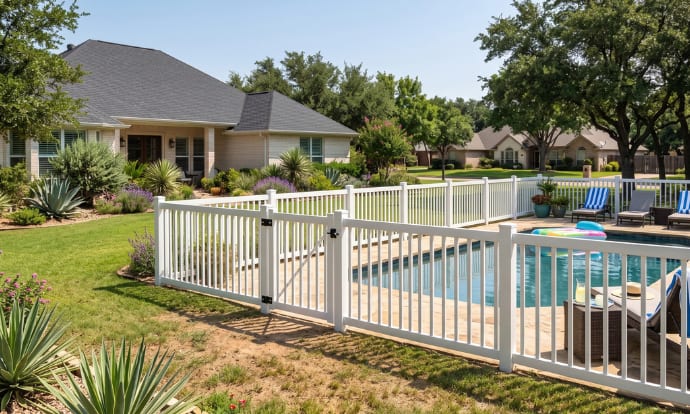
While model frameworks like the International Residential Code (IRC) establish national guidelines, state statutes establish distinct legal mandates. Your layout must meet state laws and local city codes. Complying with Texas Health and Safety Code Chapter 757 goes beyond passing an inspection - it is your most effective defense against accidental drowning.
Primary Code Specifications
2. Technical Design Rules: Gates, Rails & Non-Climbable Zones
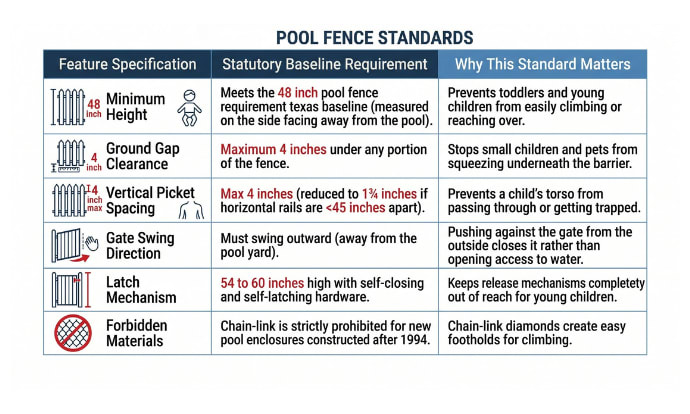
Choosing the best pool safety fence for backyard spaces takes more than good-looking panels. You also need engineered safety hardware and non-climbable layouts to keep kids safe.
The Pool Gate Self-Closing Latch Requirement
The entry gate is statistically the most critical component of a pool barrier. To achieve pool fence code compliance, every gate must satisfy the pool gate self-closing latch requirement:
- Self-Closing Hinges: Spring-tensioned or hydraulic hinges pull the gate shut automatically from any open position.
- Self-Latching Hardware: Utilizes magnetic or gravity-fed latches that engage automatically upon closing without manual effort.
- Latch Placement: Mount the release at least 54 to 60 inches above the ground. Alternatively, place it on the pool side with protective shielding so kids cannot reach through to open it.
Pool Fence Non-Climbable Zone Rules
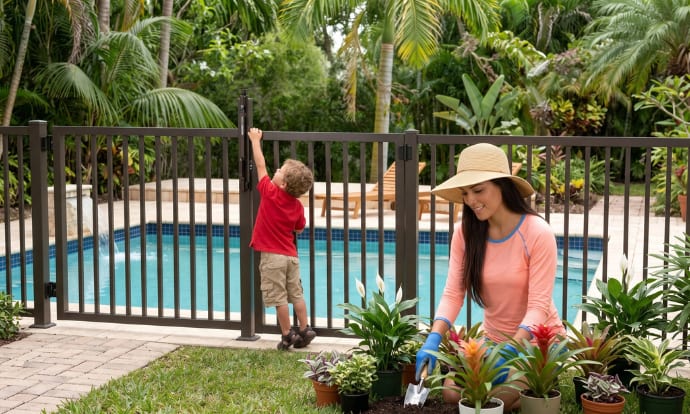
Children naturally look for footholds to climb. Installers must adhere to strict pool fence non-climbable zone rules:
- Horizontal Rail Placement: Rails spaced less than 45 inches apart must face inward toward the pool. This prevents children from using them as ladder rungs.
- Clearance Radius: Maintain a clear 36-inch non-climbable perimeter around the outside the fence line. Permanent fixtures like tree trunks, planters, wall ledges, or AC units must not sit within this zone.
3. Protecting Children: When House Walls Serve as Barriers
In many residential layouts, a rear house wall serves as one side of the pool enclosure. Because interior doors provide direct access to the water, safety codes enforce strict secondary precautions:
- UL 2017 Door & Window Alarms: Install audible alarms on any house door or low window opening to the pool. The alarm must emit a continuous 85-decibel alert when opened.
- Self-Closing House Access: Install automatic door closers on exterior house doors. Mount secondary latches at least 54 inches high to keep them out of reach.
- Automatic Covers: Some cities follow the International Swimming Pool and Spa Code (ISPSC). In these areas, an ASTM F1346 power safety cover can replace door alarms.
4. Selecting Code-Compliant Materials
Providing reliable pool fencing for kids and pool fencing for children does not mean sacrificing outdoor aesthetics. Homeowners can choose from several approved, durable materials that pass inspection and protect their yards:
- Aluminum & Ornamental Iron: Premium options offering sleek vertical pickets without horizontal footholds, naturally satisfying height requirements while withstanding poolside moisture.
- Removable Mesh Fencing: A popular choice for families needing temporary safety. High-density mesh features tensioned posts, self-closing gate kits, and transparent borders that preserve sightlines.
- Solid Wood Privacy Fencing: Delivers complete privacy. Install the smooth picket side facing out so kids cannot use the framing to climb.
- Vinyl & Composite Fencing: These low-maintenance materials resist chlorine, rot, and moisture. They feature smooth, non-climbable surfaces that meet state spacing rules.
5. Avoiding Common Code Compliance Pitfalls
Achieving full pool fence code compliance and avoiding inspection failures usually comes down to small installation oversights. Before scheduling your inspection, double-check these common problem areas:
- Gate Swings the Wrong Way: Installing a gate that swings inward toward the pool area instead of swinging outward away from the pool yard.
- Uneven Ground Clearance: Leaving gaps larger than 4 inches over sloped soil or soft lawn edges.
- Weak Hinge Tension: Gate hinges lack enough tension, causing the gate to stay open instead of self-latching.
- Missing House Door Alarms: Forgetting to install alarms or high-mounted latches on patio sliding doors.
- Horizontal Rail Mistakes: Placing horizontal framing members on the outside the fence with pickets spaced wider than 1-3/4 inches.
Final Thoughts
Maintaining strict pool fence code compliance ensures your backyard remains a secure sanctuary. Follow Texas pool fence requirements and Texas Health and Safety Code Chapter 757 to keep your pool safe. Proper hardware and design will protect your family and give you complete peace of mind.