



What is the Best Wood for a Fence in Texas?
Texas Weather: A Brutal Daily Test for Your Wooden Fence
In the Lone Star State, a wooden fence faces a brutal daily test. Torrential rain followed by extreme heat makes wood repeatedly swell and shrink. Knowing which lumber survives these cycles prevents your wood fence panels from warping or falling apart after just one season.
- UV Exposure: The Texas sun doesn’t just fade a fence; ultraviolet (UV) radiation is a silent killer that breaks down lignin in wood fibers. This causes a brittle, silver-gray look that signals structural decline.
- Shifting Soils: It’s not just the heat; Texas soil varies wildly. From the shifting "black gumbo" clay in Dallas to the rocky terrain of the Hill Country, soil movement can wreak havoc on a wood picket fence.
- Physical Stress: Clay soils expand and contract with moisture levels, putting immense physical stress on fence posts. Without proper materials, a fence that looks level in May could be tilting by September.
What Wood Materials Are Actually Performing in 2026
At First Fence USA, we provide the pro-grade supplies needed for a durable wood fence in Texas. Here is what is working on the ground right now:
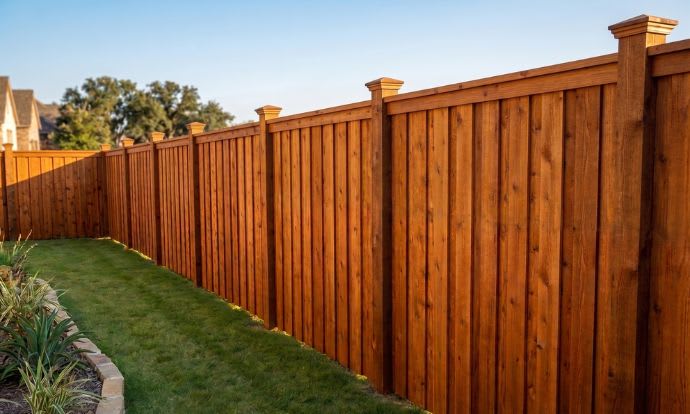
Western Red Cedar: The High-Quality Industry Gold Standard
If you’re aiming for top-tier quality, western red cedar fence materials remain the industry gold standard for a premium Texas fence.
- Natural Protection: Built-in oils (thujaplicins) help resist rot and termites common in the Texas Blackland Prairie.
- Stability: It stays straight. Contractors love it because it doesn't warp, twist, or "cup" like cheaper alternatives.
- Long Life: Using Grade 1 cedar wood fence pickets can provide a 20–25 year lifespan - nearly double that of store-bought spruce.
Japanese Cedar (Japonica): The Rising Favorite
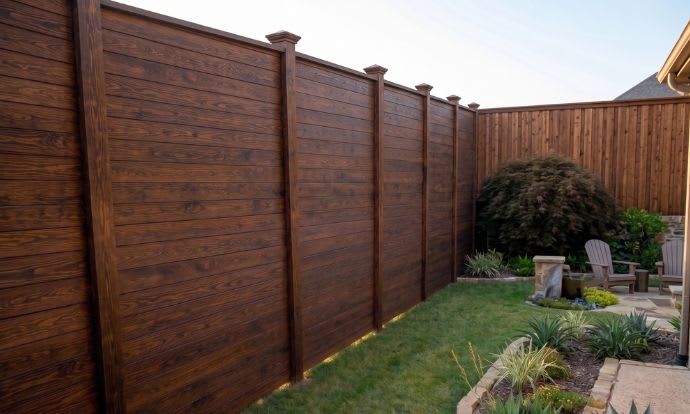
Japanese cedar fence boards, often called Japonica or Sugi, are the top trend for 2026. It is a smart middle-ground between expensive cedar and budget pine.
- The Look: It features a beautiful reddish-brown color and a straight grain that looks identical to a high-end western red cedar fence.
- Naturally Tough: It possesses its own oils to fight decay and pests.
- Modern Style: Strong and lightweight, it is the top choice for trendy horizontal wood fence panels in DFW.
Pro Tip: In the Texas heat, use a quality stain to prevent surface "checking" and keep your privacy fence looking sharp.
Southern Yellow Pine: The Structural Backbone
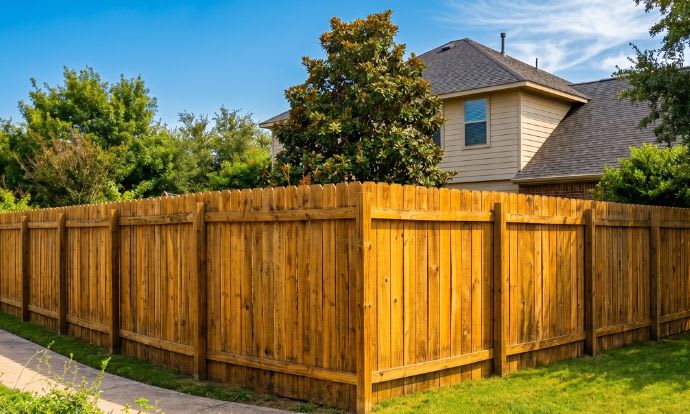
Pine fence material is the workhorse for the "bones" of the project.
- Strength: It is pressure-treated to stop rot, making it the best choice for fence posts and runners.
- Strategic Use: While strong, it can warp in the sun, so we recommend it for the frame rather than the wood picket fence surfaces.
2026 Design Trends Taking Over Texas
Today’s customers want a garden fence that balances sleek curb appeal with total backyard privacy.
- Modern Horizontal Wood Fence: This sleek look is exploding in major Texas cities. Japonica wood is the top choice here because its grain is exceptionally straight, making long runs look seamless.
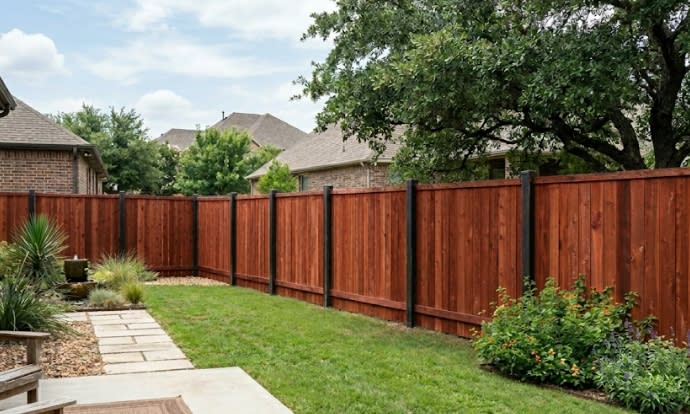
- Board-on-Board Privacy: This design overlaps the pickets so that when the wood shrinks in the heat, you won't get gaps. It’s the best way to block out noise and prying eyes.
- Hybrid Fence Systems: A major 2026 trend is the "Hybrid Fence". By using hidden steel posts and a pressure-treated rot board at the bottom, you protect wood fence panels. It helps prevent ground moisture damage and weed-eater damage.
Partner with a Texas Leader: First Fence USA
For contractors, success means getting the right materials on time. First Fence USA helps you win. We keep large stocks of western red cedar fence, Japanese cedar boards, and treated pine materials in Texas. This helps protect you from price spikes while you elevate your next project with the best supplies in the business.
Check out our full inventory at First Fence USA today.