



Welded Wire Mesh Fencing: The Ultimate Buyer’s Guide
Welded Wire vs. Chain Link
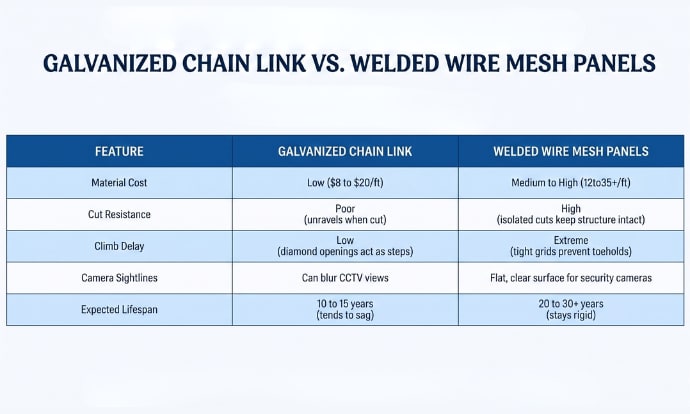
Understanding the benefits of welded wire mesh fencing over chain link comes down to how the fence is made.
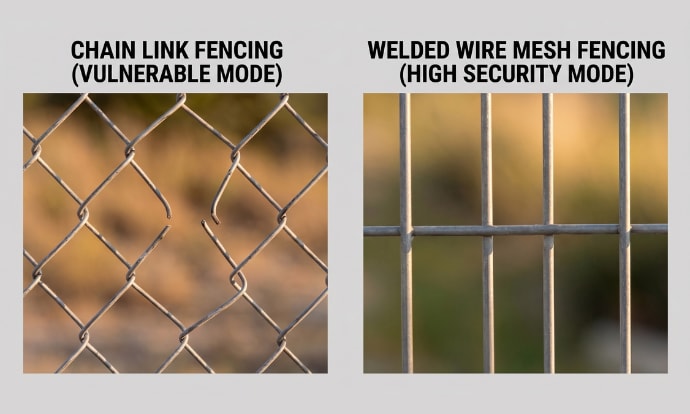
- Chain link is made of woven wires hooked together. If a trespasser cuts just one wire, the whole fence unravels under tension. This lets someone peel the fence back in seconds.
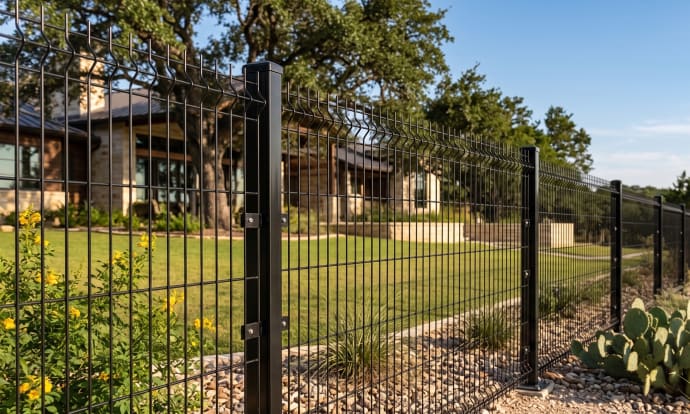
- Welded wire mesh fuses every horizontal and vertical wire together at every single intersection. If someone cuts one wire, the surrounding grid stays firmly in place.
When comparing a welded wire vs chain-link security fence, welded panels cost more upfront, but they save money long-term because they do not sag or need constant repairs.
When Chain Link is Ideal
- Large Perimeters & Budget: Most cost-effective solution per linear foot for expansive boundaries and solar farms.
- Sloped Terrain: Woven mesh flexibly follows natural ground contours without gaps.
- Versatile Utility: Easy to install or adjust for sports fields, laydown yards, and long-term security.
When Welded Wire Mesh is Ideal
- High Security: Anti-climb, anti-cut rigid panels (like 358 mesh) prevent unauthorized access.
- Modern Aesthetics: Clean, architectural lines elevate corporate, school, and data center perimeters.
- Camera Visibility & Rigidity: Won't sag or unravel, providing clear camera lines of sight and maximum vandal resistance.
Choosing the Right Panel Profile
Knowing how to choose commercial security mesh fencing depends on your property's specific threat level. Refer to this simple welded wire mesh gauge guide for security fencing to match the panel style to your needs:
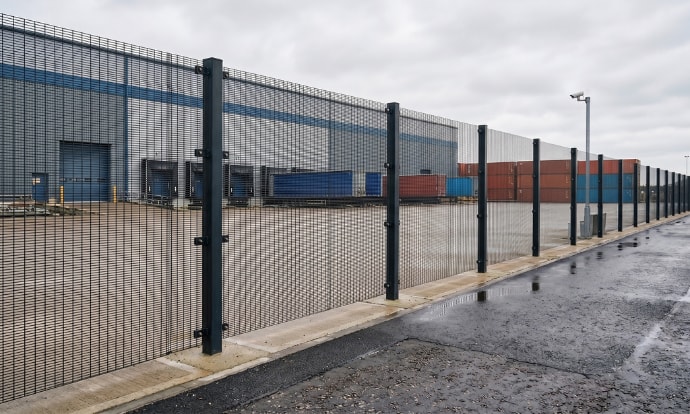
- 358 Anti-Climb Security Mesh Fence: Known as "prison mesh," this system uses tiny 3-inch by 0.5-inch grid openings made from heavy 8-gauge wire. This dense spacing creates an anti climb anti cut welded mesh fencing barrier. The gaps are too small for fingers or toes to climb, and too narrow for standard bolt cutters to squeeze in. These high security welded wire fence panels are the standard choice for power stations, water plants, and data centers.
- Twin Wire Mesh Fencing 868: This heavy-duty system welds two thick 8mm horizontal wires on opposite sides of a 6mm vertical wire. These industrial welded mesh fencing panels absorb heavy lateral impacts, making them ideal for busy shipping yards, truck depots, and sports facilities.
- V Mesh Perimeter Security Fencing: These panels feature pressed "V" shaped bends along the panel. The V-fold acts like a structural beam, giving thin wire great strength without adding unnecessary weight. It is an affordable, clean-looking option for schools, parks, and business yards.
Coatings, Posts, and Complete Fence Kits
Raw steel rusts quickly when exposed to rain, sprinkler water, and outdoor air. Standard galvanized welded mesh perimeter fencing uses zinc-coated steel wire to stop surface rust.
For maximum weather resistance, always choose powder-coated welded wire fence panels. These panels use a dual-layer design: a protective zinc base layer under a tough polyester powder finish. This double seal stops rust at the weld points and provides over 20 years of maintenance-free service.
When ordering materials, work with a reliable commercial mesh security fence supply business that sells security fence panels with posts and gates as matched sets. Buying complete kits ensures that structural posts, mounting brackets, walk gates, truck drive gates, and keypad locks all fit together perfectly during setup.
Working directly with First Fence USA as your primary US welded wire mesh distributor ensures your projects stay on schedule, backed by our extensive in-stock commercial inventory and zero multi-month factory delays.
Contractor Installation Guide for Unstable Soils
A welded mesh fence installation guide for contractors must address proper ground foundations. Because welded wire panels are completely rigid, ground movement will push panels out of line and stop gates from latching correctly.
In areas with heavy clay soils that swell when wet and shrink when dry, follow these three installation rules:
- Dig Deep Footings: Drill post holes 36 to 42 inches deep to anchor post bases below the active soil moisture zone.
- Bell the Hole Bottoms: Flare or "bell out" the bottom of each post hole before pouring concrete. The cured concrete base creates an upside-down wedge that stops moving clay from lifting the post.
- Step Panels on Hills: Never force or bend rigid panels to follow ground slopes. Instead, step the panels down the post uprights at even height steps, filling any bottom gaps with concrete curbing or gravel.
Final Thoughts
Replacing outdated chain link with commercial welded mesh provides your property with true physical security, clear views for surveillance cameras, and a clean modern look built to last for decades.