



10 Things to Know Before Installing a Fence in Texas (DFW)
1. Dial In Your Pre-Installation Logistics
Before the first fence post hits the dirt, you’ve got to know exactly where you stand - literally.
- Verify Property Lines: Don't guess based on where the old fence was. Check your plat map or hire a surveyor to find the metal pins buried 6 to 10 inches down.
- HOA & POA Rules: Even with state protections for security, your Architectural Review Committee usually calls the shots on aesthetics. Get your application in 30–45 days early so you aren't forced to tear down a brand-new build.
2. Respect the 811 Protocol
Underground utility safety is strictly governed by the Texas Utilities Code.
- The "One-Call" Law: You or your contractor must notify 811 at least 48 hours before digging.
- Know the Colors: Red is electric, yellow is gas, and blue is water. Never let a shovel hit the ground until you see those flags and verify your contractor’s 811 ticket number.
3. Choose the Best Fencing Materials for the Texas Heat
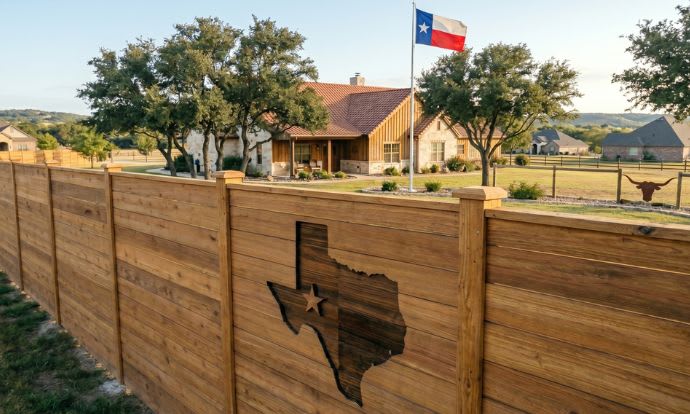
In the DFW climate, the species of wood fencing you choose determines your fence's lifespan.
1. Western Red Cedar
The undisputed gold standard for cedar fencing. Its natural oils provide built-in resistance to rot and termites while staying stable in 100°F+ heat.
- Texas Benefits: Naturally withstands brutal summers without warping or shrinking as aggressively as other woods. It holds up remarkably well against the extreme humidity swings common in DFW.
2. Japanese Cedar (Sugi)
A great budget-friendly cedar that holds up similarly to Western Red. This #1 wood has tighter knots than Western Red but looks amazing when stained.
- Texas Benefits: Offers the classic Texas cedar look at a lower price point. It is an ideal option for larger suburban properties, provided you are diligent with staining and maintenance.
3. Pressure-Treated Pine
Pressure-Treated Pine - the most affordable upfront cost, though it is prone to warping and twisting under the Texas sun if not allowed to dry out before staining.
- Texas Benefits: Highly accessible and inexpensive. Best used for agricultural boundaries or as a quick budget solution following severe Texas spring storms.
4. Vinyl Fencing
The "Maintenance Free" choice! Vinyl is becoming increasingly popular as the go-to fencing solution across the state.
- Texas Benefits: Virtually immune to the intense UV rays that bleach natural wood. It is completely impervious to wood-eating pests (like termites and carpenter ants) and won't rot during heavy spring downpours.
5. Ornamental Iron Fencing
Ornamental Iron - a premium choice for strength and visibility.
- Texas Benefits: Offers unparalleled structural rigidity against the 100+ mph wind gusts that routinely accompany DFW thunderstorms. Because iron allows wind to pass through, it doesn't act like a "sail" like privacy fences do, greatly reducing the risk of blow-overs.
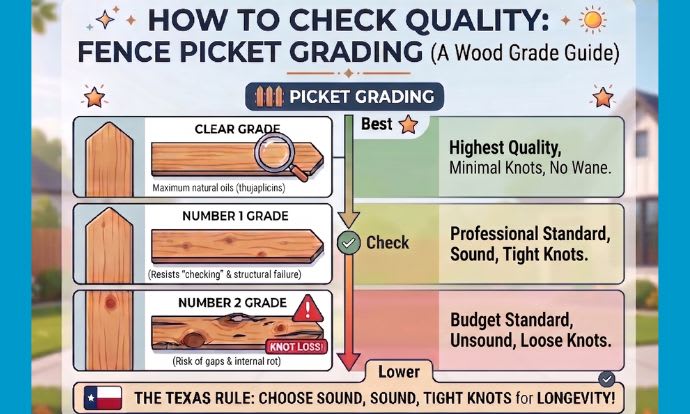
4. Check for Quality: Wood Fence Grading
Don't just buy any generic wood fence panels. Inspect the fence pickets before they go up.
The Grade: "#1 Grade" has small, tight knots for a clean look; "#2 Grade" is the industry standard but has larger knots that might eventually fall out.
5. Engineer for "Black Gumbo" Clay
North Texas soil expands and shrinks with a massive amount of force.
- Deep Foundations: Your fence post needs to be 36–42 inches deep to get below the "moving" zone of the clay.
- The "Belling" Technique: We widen the bottom of the post hole to create a concrete anchor. This stops the clay from literally "heaving" your Texas fence out of the ground.
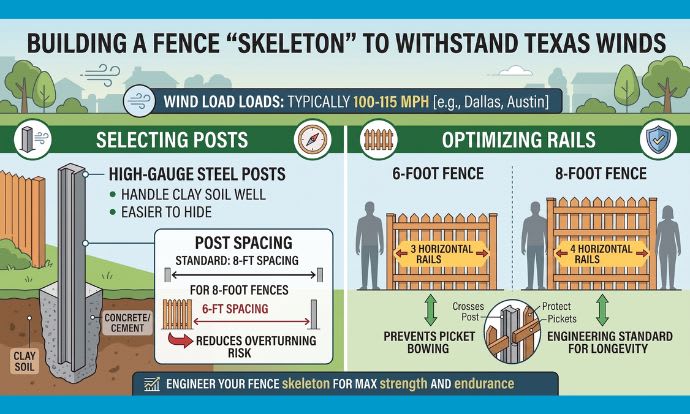
6. Build a High-Wind “Skeleton”
DFW wind loads can hit 115 mph. Your wood privacy fence needs a backbone that can take a punch.
- Steel Posts: Use galvanized, high-gauge steel. It won't rot in wet clay. For 8-foot privacy fences, we space them every 6 feet to prevent overturning.
- The Rails: A 6-foot fence needs three horizontal rails; an 8-foot fence requires four to keep the pickets from bowing.
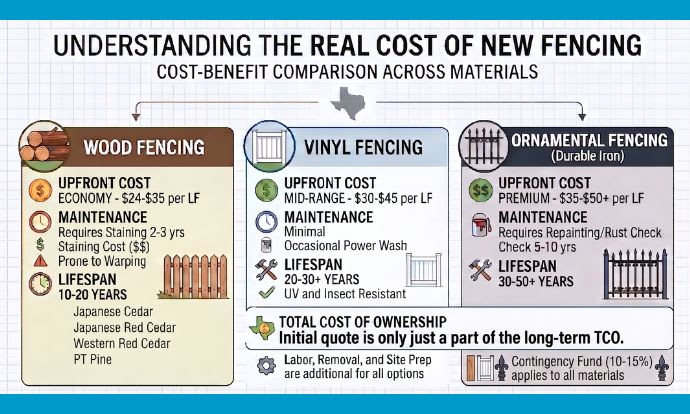
7. Calculate the Real Cost of a New Fence
The cost of a new fence isn't just the install price - it's the "Total Cost of Ownership." Wood Fencing requires maintenance to maximize the lifespan of the fence. Ornamental Iron and Vinyl Fencing is virtually maintenance free.
8. Master Your Maintenance Vitals
If you ignore a wooden fence, the sun will grey it out in a year.
- Fence Staining: Use an oil-based penetrating stain with UV inhibitors every 3–5 years. Oil-based is better than water-based because it saturates the wood fibers instead of just sitting on top.
- Sprinkler Audit: Make sure your irrigation isn't blasting the wood. Constant soaking leads to rot and fungal growth.
- Environment: Trim vegetation to improve airflow and keep pickets off the ground to prevent termite activity.
9. Upgrades for Maximum Longevity
Small additions now save big money later.
- Kickboard (Rot Board): Install a pressure-treated board at the bottom. It keeps your expensive cedar pickets off the wet ground and protects them from weed-eaters.
- Top Caps: Capping the end-grain of the wood prevents rainwater from soaking into the top of the boards where rot starts.
10. Invest in a Solid Gate
The wood fence gate is the only moving part, which makes it the first thing to fail.
- Why Gates Matter: In shifting soil, gates are under constant stress. Using heavy-duty hinges is essential to distribute weight and prevent dragging.
- Over-Engineer: Set gate posts 6–8 inches deeper than line posts.
- Safety First: If you have a pool, Texas law requires self-closing, self-latching gates that swing away from the water.
No matter what style of fencing material you choose for your next project, First Fence USA has the products and expertise you need to get the job done right.
Visit us online at firstfenceusa.com or call us directly at (945) 941-2111 to speak with one of our fencing specialists.